To begin with, all the different ways of seeing and representing the art, have been changing along the years and in the 1890s, parallel to symbolism, it started the international style of Art Nouveau, throughout Europe and America. Designers, painters, and sculptors began to use their skills to document events and to implement new styles. Also, they developed dynamic and expressive ideas which began to treat the form, material, and technology in an absolutely new way. Artists started to create art and design inspired by organic, geometric and natural forms.
In Britain, It was not until the 1860s and ’70 that the architecture and design came out to promote another way of creating objects avoiding the dehumanizing way. The name of this movement was taken from the Arts and Craft Exhibition Society, a group created in London in 1887 that boosted the exhibition of decorative arts along with fine arts. The Great exhibition of 1851 and the Refreshment Rooms of the South Kensington Museum in 1860, gave an opportunity to all the artists and designers to expose their work in public with no preoccupations of exerting influence and reaching potential customers.
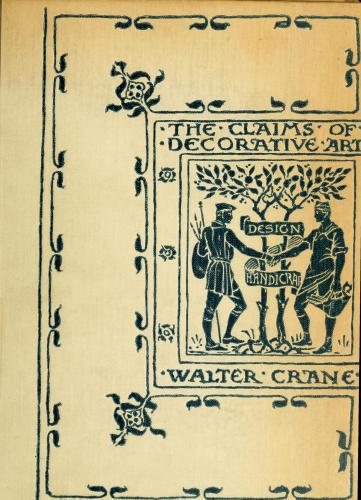
The Arts and Craft Exhibition was created with the objective to support the decorative arts and fine arts. The artist and illustrator Walter Crane was a committed socialist and the first director of this society. He is recognized for creating a book called The Claims of Decorative Arts that contains 12 essays on art theory focusing on the applied arts.

 Maria Francas
